We don’t currently offer Occupational therapy in Imst.
This service is available at our Innsbruck location.
At a glance
Occupational therapy supports people of all ages whose ability to manage everyday activities is limited, or who want to extend it. It is based on the idea that being active is a basic human need with health-promoting and therapeutic effects. The aim is to strengthen people in self-care, productivity and leisure.
What we offer
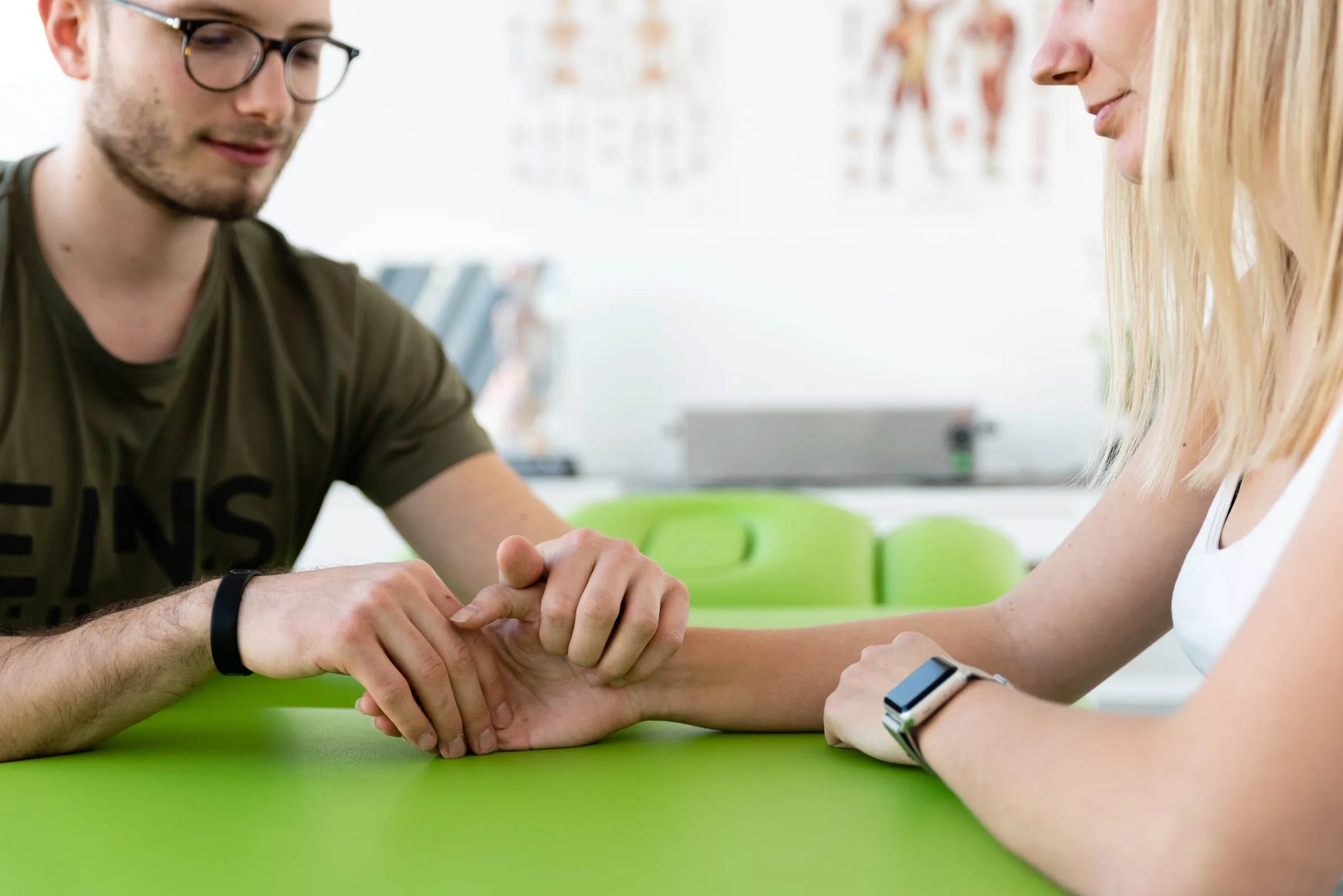
Manual therapy techniques are used to achieve the best possible functional range of movement and so make everyday life as easy as possible. Joints and the surrounding structures are mobilised actively, with assistance or passively.
Techniques include joint mobilisation, fascial or muscular soft-tissue techniques and strengthening exercises.
Disturbed sensation in the hands can be very disruptive and make it much harder to grip and hold objects. A distinction is made between oversensitivity (hypersensitivity) and reduced sensitivity (hyposensitivity). With acquired nerve injuries, specially tailored therapy aims to normalise the disturbed nerve conduction. Finding the cause plays a very important role.
If, for example, your left arm has to be immobilised after an accident or surgery, your right arm has to do even more. This changes not only how you manage everyday life but also how signals are processed in the brain. Inactivity means the immobilised hand receives fewer sensorimotor impulses, while the other side is stimulated more. Muscles waste away during immobilisation, finger coordination and strength decrease and mobility increasingly declines.
Balance and coordination exercises, together with instruction in so-called mirror therapy, aim to transfer more impulses to the immobilised side in order to restore function as quickly as possible.
Scars can severely restrict mobility and cause pain.
Therapeutic techniques aim to release adhesions and hardening of the scar tissue so that the individual layers of tissue can glide properly again. The earlier mobilisation starts after the scar forms, the sooner the tissue can be freed.
Injuries cause swelling, which usually also restricts movement.
Decongestive techniques promote lymph drainage and circulation and lead to faster recovery. Local measures such as elevation, cooling, taping or compression bandages also help tissue fluid drain away more quickly.
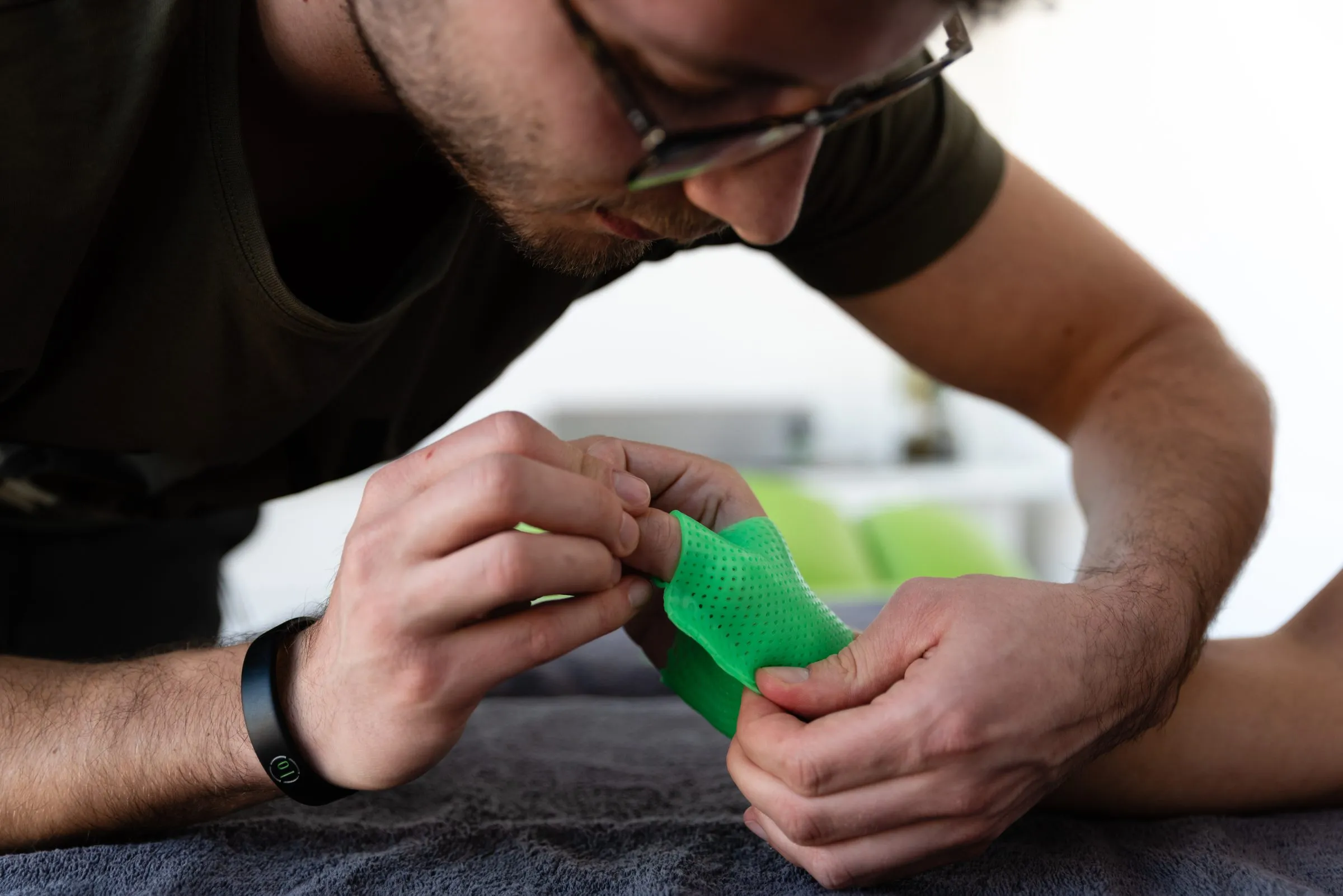
Splints made of thermoplastic materials can stabilise, mobilise and stretch shortened structures such as hardened scars. Because the splint materials are fitted directly, pressure points can be avoided and the splint can easily be adjusted if needed.
Permanent movement restrictions are often compensated for by evasive movements of other joints, which in turn lead to non-physiological joint positions.
Suitable aids are used above all for permanent mobility restrictions to make it easier to manage everyday life independently. Joint protection measures aim to prevent wear and tear from one-sided strain by drawing attention to correctly aligned posture and strengthening weakened muscle groups.
Ergonomic advice mainly involves working out together with patients how their workplace can best be adapted to their working posture and movements, to prevent postural damage in the long term. This also includes learning compensating exercises, planning breaks properly and strengthening the back muscles.
Your contact
Do you have questions about Occupational therapy? Get in touch directly – we’re happy to advise you.
Your central point of contact
For many people, an injury, complaints or pain in the musculoskeletal system mean a stressful, unusual situation. As your central point of contact, Physio 1.0 takes care of the whole coordination – so you can focus fully on your recovery.
“The highest quality is our standard”