At a glance
What is physiotherapy?
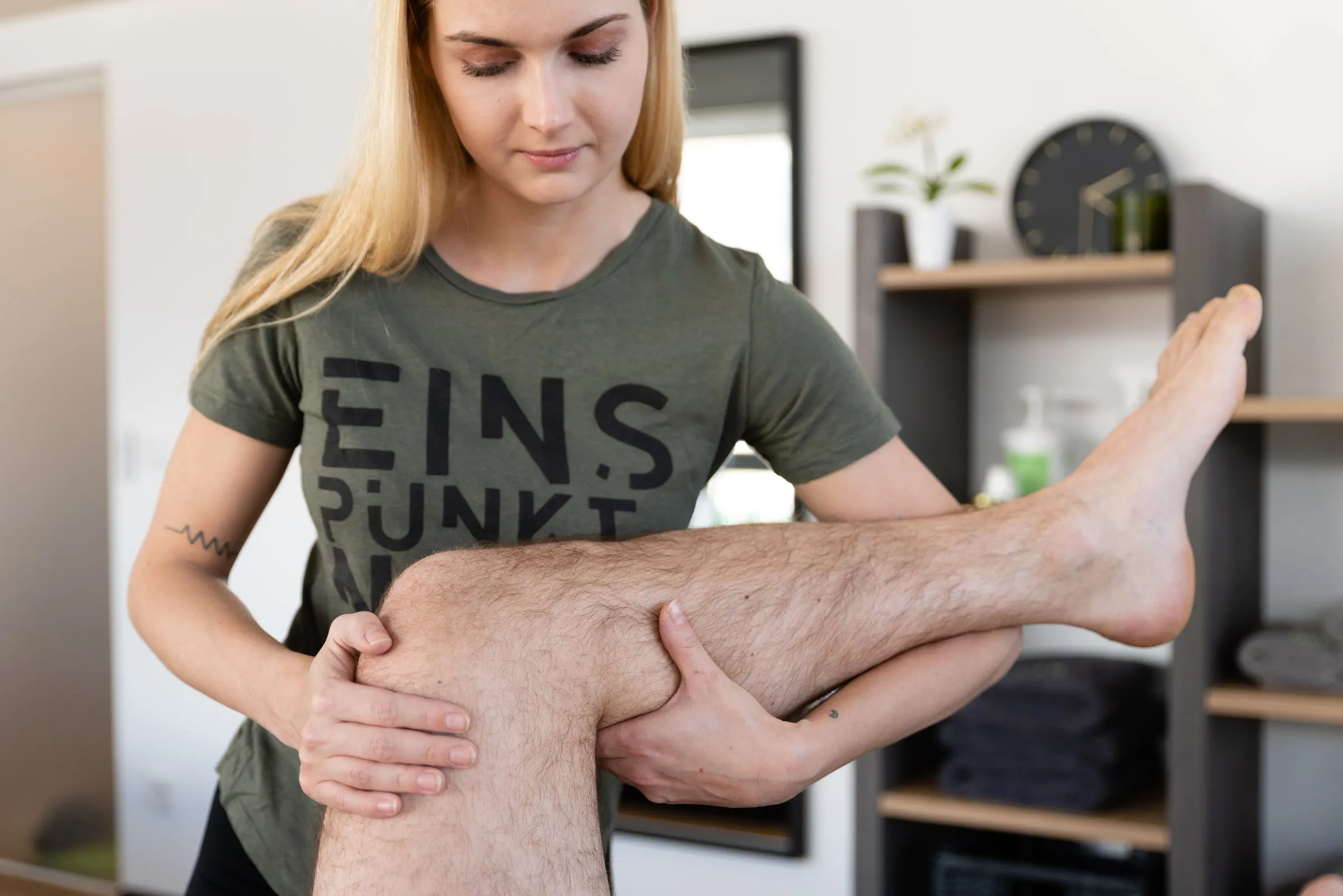
Physiotherapy is a conservative form of treatment that looks at the body as a whole and takes its anatomical and physiological conditions into account.
Above all, it aims to restore, improve or maintain the mobility and function of the human body.
What we offer
Our services
Therapeutic exercise
Therapeutic exercise
Mobilising physiotherapy and therapeutic exercise are umbrella terms for physiotherapy treatment concepts and techniques carried out as one-to-one treatment. They can be passive, assisted or active.
They include all physiotherapy measures used to restore, maintain or improve the function of the body. Physiotherapy techniques are used to treat the effects of injuries, illnesses, developmental problems and functional disorders of the musculoskeletal system, as well as of the internal organs and the nervous system.
Every treatment is based on a thorough medical history and examination of the problem and a physiotherapy assessment. A treatment plan is then developed and the therapy tailored to your individual situation.
Manual therapy
Manual therapy
What makes manual therapy special is that it combines an individual assessment tailored to you and the treatment with our clinical experience and the latest scientific findings. As the name suggests, our hands play a big part. Alongside passive joint mobilisation and manipulation of the arms, legs and spine, we use neurodynamic techniques, muscle stretches and individually adapted home programmes.
Good treatment starts with a thorough examination of the problem and the limitations it causes in everyday life. Only then do we examine your body for active and passive movement restrictions and other symptoms. This clinical diagnosis helps us find where the cause of your problem most likely lies. We then draw up a treatment plan that focuses on the most significant findings. Regular re-assessments show how well the therapy is working and, if needed, test how other parts of the body influence the problem.
Manual therapy is used in particular for:
- pain relief (when movement is restricted by severe pain)
- improving mobility (when joint or nerve mobility or muscle flexibility is restricted)
- functional rehabilitation (taking all contributing psychosocial factors into account)
- treating orthopaedic and trauma-related problems
Lymphatic drainage
Lymphatic drainage
Lymphatic drainage stimulates the flow of lymph and reduces congestion in the tissue using specific massage techniques. These are performed gently, mostly in circular or pumping movements.
This creates a stretching stimulus on the lymph vessels that helps transport the lymph fluid to the lymph nodes, where it is filtered before being returned to the bloodstream.
Manual lymphatic drainage was developed by Dr Emil Vodder and is used for primary lymphoedema – malformations of the lymphatic system – and secondary lymphoedema (swelling), for example after surgery.
It may only be carried out by professionals with additional training in manual lymphatic drainage from an accredited training institute.
Medical & sports massage
Medical & sports massage
Medical massage treats tension, pain and disorders of the musculoskeletal system. It acts on the skin, muscles, subcutaneous connective tissue and tendons. Different massage techniques are used to achieve specific effects on the body.
Sports massage is a special form of massage that helps prepare the body for upcoming physical exertion and improve or restore performance. It also supports recovery after exercise and loosens the muscles.
Sports physiotherapy
Sports physiotherapy
The aim of sports physiotherapy is to bring the resilience of all structures up to the level your sport demands. Both prevention and rehabilitation are important.
To prevent injuries and overuse, support during training and competition is crucial. This includes muscle and joint function testing, sports medicine performance testing, training management and relaxation and recovery measures.
In rehabilitation after injuries or periods of reduced performance, the focus is on therapy with sport-specific loads and forms of rehabilitation training.
P.N.F.
P.N.F.
The full name of this treatment method is “proprioceptive neuromuscular facilitation”, a holistic physiotherapy concept. It uses the body’s potential at the level of perception to improve the interaction between nerves and muscles. Facilitation means initiating and easing physiological movements.
In practice, a three-dimensional, physiological movement pattern is performed against an adapted resistance.
Taping
Taping
Rigid tape is used to stabilise and relieve injured or painful joints, for example after a torn ligament. Joints are also often taped as a precaution to prevent a possible injury.
Kinesio taping
Kinesio taping
Kinesio tape is an elastic cotton tape that, applied in a targeted way, stimulates and supports the body’s natural healing process. It improves the sense of movement, increases blood flow and lymph flow, changes the perception of pain and influences muscle tension.
Fascia mobilisation
Fascia mobilisation
Fascia is the body’s connective tissue network; as a web-like structure it gives the whole body its shape and elasticity. It surrounds our muscles and ligaments, tendons and bones, organs and blood vessels. It is everywhere in the body and acts as a sheath, partition and connection. Healthy fascia is firm and elastic at the same time – flexible and tear-resistant, allowing springy movements. This keeps the tissue resilient, protects against injuries and keeps us in shape.
Mobilising the fascia can improve the resilience and function of this structure or correct its position and alignment. This can be done with manual techniques or with appropriate fascia training using various tools (e.g. a foam roller).
Medical flossing
Medical flossing
Medical flossing can have a positive effect on pain and restricted movement. With this method, muscles or joints are wrapped locally with a stretchy latex band and then moved. The elastic compression of the flossing band and the shear forces created by the movement can quickly change and normalise tension in the tissue.
Home visits
Home visits
We offer most physiotherapy treatments as home visits too. Your doctor prescribes this additionally if there is a medical reason for it. We then come to your home at an agreed time. This means we can treat you even if limited mobility prevents you from coming to the practice.
That said, our treatment rooms are easy to reach – also with a wheelchair or pram – thanks to good public transport connections and a lift.
AlterG
AlterG
Training with reduced gravity speeds up the start of gait therapy and makes quick progress in therapy possible. With the anti-gravity treadmill, patients can walk or run pain-free immediately after surgery and injuries to the knee, ankle or hip.
Early mobilisation and maintaining a natural gait help restore function more quickly. The unique differential air pressure technology ensures safe, comfortable and precise training with targeted weight relief. The point from which running and walking are pain-free for you can be set exactly.
Club support
Club support
Whether amateur clubs or top athletes – we support sports clubs and individual athletes at training sessions and competitions with our holistic care: from first aid on site to a safe return to sport.
Open Gym
Open Gym
As a service for our active patients, we offer the option of training independently on our premises outside your therapy or training sessions.
This way you can do the exercises from your therapy or training on your own in an ideal environment, with all the equipment and materials you need.
That is exactly why we created the “Open Gym”: set times during which you can train independently with us, as long as you are an active patient or client of Physio 1.0.
HOW does it work?
You can book our “Open Gym” times via our customer portal, through our front office or through our therapists and trainers. Each training slot can be booked by a maximum of 6 people at the same time, so there is enough space and capacity for you.
Your central point of contact
Why
Physio 1.0
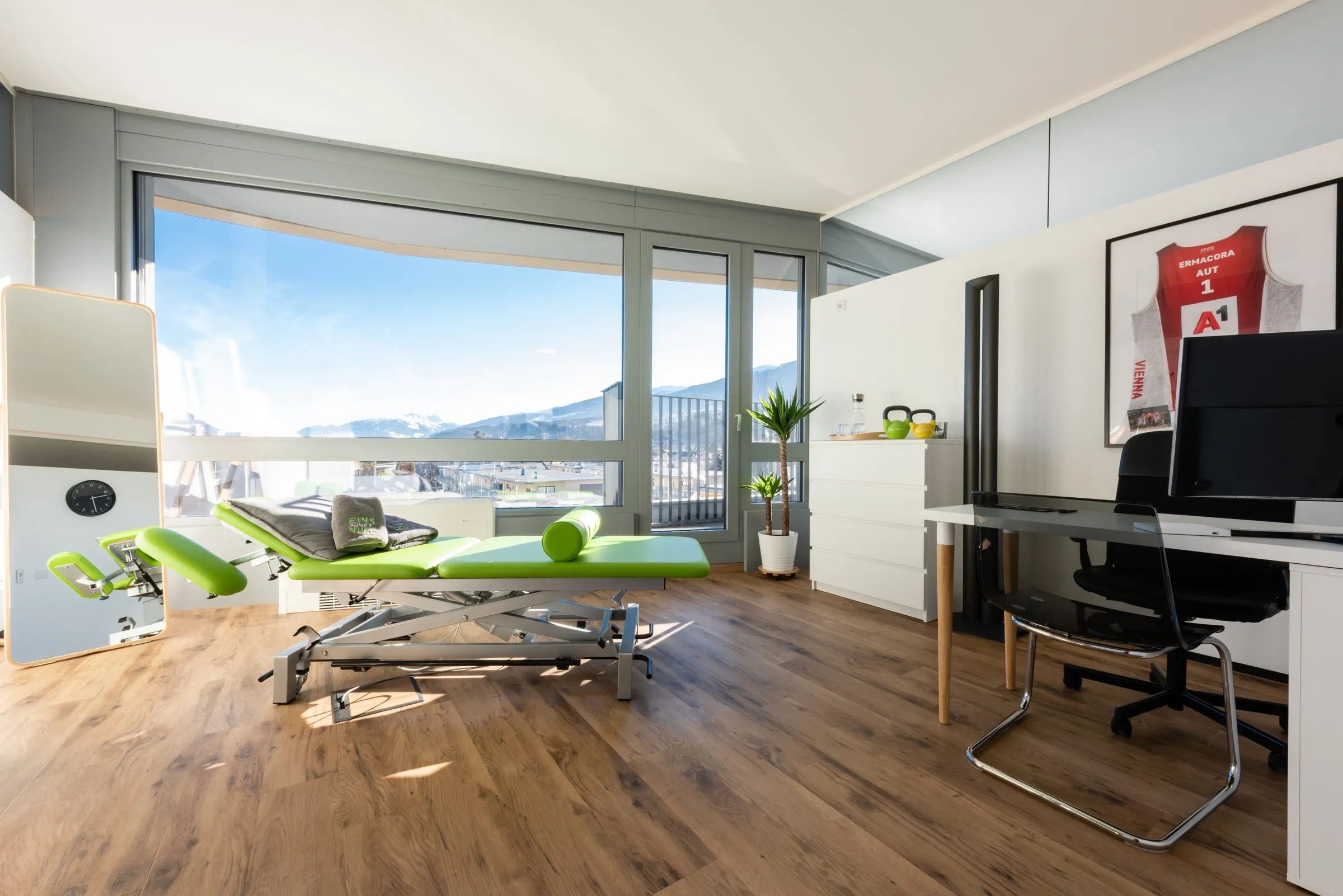
For many people, an injury, complaints or pain in the musculoskeletal system mean a stressful, unusual situation. As your central point of contact, Physio 1.0 takes care of the whole coordination – so you can focus fully on your recovery.
“The highest quality is our standard”